Lost in Milan’s Hidden Corners: The Secret Themes You’ve Never Heard Of
You know that feeling when you think you’ve seen it all in a city, and then—bam—something totally unexpected hits you? Yeah, that’s exactly what happened in Milan. Forget the usual tourist trails. I’m talking about the city’s quiet, quirky, and wildly creative theme zones most people don’t even know exist. From vintage book alleyways to underground art tunnels, Milan hides its magic in plain sight. This is not just another guide. This is a real traveler’s story—raw, vivid, and full of those “why hasn’t anyone told me about this?!” moments. It’s about shifting from ticking off landmarks to truly sensing the rhythm of a place, one hidden corner at a time.
The Real Milan Beyond the Duomo
Milan is often reduced to a trio of icons: fashion, finance, and the magnificent Duomo. Tourists flock to designer boutiques on Via Montenapoleone, snap photos of the marble cathedral, and catch high-speed trains to Lake Como or Venice. But beneath this polished surface lies a more intimate, textured Milan—one shaped not by grand monuments, but by the quiet, cumulative effect of neighborhood identities. These are not official districts marked on maps, but organic theme zones that have evolved through decades of cultural accumulation, artisan presence, and local passion. They emerge where communities gather around shared interests—be it literature, greenery, craftsmanship, or sound—and slowly transform their surroundings into immersive experiences.
Understanding these theme areas requires a shift in travel mindset. Instead of approaching Milan as a checklist of must-see attractions, visitors are invited to explore it as a living mosaic of microcultures. This experiential form of tourism emphasizes presence over productivity. It values lingering in a sunlit courtyard over snapping a quick photo, or chatting with a bookseller over rushing to the next landmark. The reward? A deeper emotional connection to the city, and memories that feel personal rather than rehearsed. Research in urban tourism has shown that travelers who engage with local culture in this way report higher satisfaction levels and longer-lasting recollections than those who stick strictly to mainstream itineraries.
What makes Milan particularly ripe for this kind of exploration is its layered history. The city has long been a crossroads of commerce, art, and innovation. Its neighborhoods absorbed waves of migration, industrial change, and artistic movements, each leaving subtle imprints. Today, these imprints surface in unexpected ways—through the design of a doorway, the scent of roasting coffee in a narrow lane, or the rhythm of daily life in a residential square. The key to uncovering them lies not in guidebooks, but in curiosity, patience, and a willingness to wander without a fixed destination.
Navigating the Secret Zones: How to Find Them Without a Map
Finding Milan’s hidden theme zones doesn’t require a secret key or an exclusive invitation. It begins with observation. These areas are not marked with signs or highlighted on tourist maps, but they announce themselves through patterns—recurring visual, auditory, or olfactory cues that suggest a shared identity. A cluster of independent bookstores on a single street, for instance, may signal the presence of a literary enclave. The consistent appearance of hand-painted murals with a similar aesthetic might indicate an artist-led neighborhood. Even the smell of fresh bread or blooming jasmine can guide you toward a place where daily life is still deeply rooted in tradition.
One of the most effective strategies is walking without a rigid plan. Instead of following GPS directions from point A to point B, allow yourself to drift. Turn down alleys that catch your eye, pause at open doorways, and notice where locals gather. The best times for this kind of exploration are early morning or late afternoon, when the city’s rhythm slows and the streets belong more to residents than tourists. During these hours, you’re more likely to witness authentic daily rituals—baristas arranging pastries, gardeners tending to potted plants, or artisans unlocking studio doors.
Public transportation can also be a powerful tool when used thoughtfully. Riding the metro or tram during off-peak hours allows you to observe neighborhoods from the outside in. Step off at lesser-known stops and explore on foot. For example, getting off at Pasteur or Wagner on the M1 line reveals residential areas with tree-lined avenues and quiet courtyards that contrast sharply with the bustling city center. These are often the very places where theme zones thrive—away from commercial pressure, yet rich in community life.
Another invaluable resource is conversation. A simple question to a barista—“What’s special about this neighborhood?”—can unlock unexpected insights. Locals are often proud of their area’s unique character and happy to share hidden spots, whether it’s a family-run bakery known for its almond tart or a small gallery tucked behind a courtyard. These personal recommendations carry more weight than any online review and often lead to the most memorable discoveries. The key is to approach these interactions with genuine interest, not just transactional curiosity.
The Vintage Book Quarter: A Bibliophile’s Dream in Brera’s Shadow
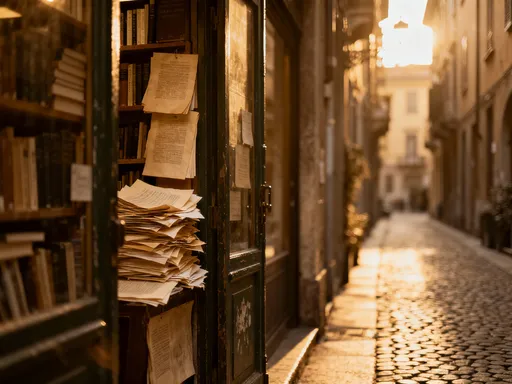
Just steps away from the fashionable galleries and cafes of Brera, one of Milan’s most artistic neighborhoods, lies a quieter, more introspective world. Nestled in a series of narrow lanes branching off Via Fiori Chiari is a pocket of the city where books are not commodities but treasures. This is Milan’s unofficial Vintage Book Quarter, a cluster of secondhand bookshops, antique print dealers, and paper conservators that together form a literary sanctuary. Here, time moves differently. The air is thick with the scent of aged paper, leather bindings, and ink that has settled into pages over decades. Shelves overflow with French poetry, 19th-century scientific journals, and Italian novels with cracked spines and handwritten notes in the margins.
Walking through this area feels like stepping into a forgotten library, one curated by generations of collectors and dreamers. Some shops are no larger than a closet, their windows crowded with stacks of books arranged by color or size rather than subject. Others open into deeper spaces, where ladders glide along rails to reach high shelves, and reading nooks are tucked into alcoves. The silence is not empty but full—the kind of quiet that comes from deep concentration, as browsers run fingers along spines, pull out volumes at random, and lose themselves in forgotten worlds.
What makes this zone more than just a collection of bookstores is its ecosystem. Printmakers still work in nearby studios, using hand presses to create limited-edition broadsides. A paper restorer operates from a top-floor apartment, repairing water-damaged manuscripts for libraries and private collectors. Even the cafés in the area cater to the literary crowd, offering slow coffee and quiet corners where visitors can sit with a newly acquired book and read for hours. This interplay between commerce, craft, and culture creates a self-sustaining atmosphere—one that feels both timeless and urgently fragile in an age of digital dominance.
For travelers, the Vintage Book Quarter offers a rare opportunity to engage with Milan’s intellectual soul. It’s a place where knowledge is not delivered in bite-sized content but discovered through serendipity. You won’t find bestsellers here, nor will you be rushed to leave. Instead, you’re invited to slow down, to touch, to read, to imagine. It’s a reminder that cities are not just made of buildings and streets, but of stories—some printed, some whispered, all waiting to be found.
The Urban Garden Circuit: Green Oases in the Concrete Maze
In a city known for its fast pace and industrial legacy, green spaces might seem like an afterthought. Yet Milan has quietly undergone a transformation, weaving nature back into its urban fabric through a network of themed gardens and repurposed landscapes. These are not just parks in the traditional sense, but intentional green zones with distinct identities—some designed for biodiversity, others for community gathering, and a few as living memorials to the city’s evolving relationship with sustainability.
One of the most striking examples is the Orto degli Aromatici, a medicinal herb garden planted on what was once a vacant lot near the Navigli district. Run by a local environmental group, it features over fifty species of aromatic and healing plants, each labeled with its botanical name and traditional use. Visitors are encouraged to touch and smell the leaves, creating a sensory experience that connects them to ancient herbal knowledge. Nearby, in the Bicocca district, a former industrial site has been transformed into Parco Nord, a sprawling green area that includes a butterfly garden, a bird sanctuary, and community orchards where residents grow figs, pomegranates, and heritage apples.
What sets these spaces apart is their purpose-driven design. They are not merely decorative but serve ecological, educational, and social functions. Schools bring students to learn about pollinators; urban farmers host workshops on composting and seed saving; and elderly residents gather for tai chi in shaded clearings. The city’s Green Milan Plan, launched in the early 2010s, has supported this shift by converting underused spaces—abandoned railway tracks, rooftop terraces, and even cemetery walls—into vertical gardens and pocket parks. One notable project, the Bosco Verticale (Vertical Forest), consists of two residential towers covered in over 900 trees and thousands of plants, which help reduce air pollution and provide habitat for birds and insects.
For the mindful traveler, these green oases offer more than just a place to rest. They reveal a different side of Milan—one that values balance, resilience, and quiet beauty. Walking through a community garden where neighbors tend to shared plots, or sitting beneath a canopy of plane trees in a cloister-turned-park, you begin to see the city not as a machine, but as a living organism. These spaces invite reflection, offering a contrast to the noise and motion of central Milan. They are proof that even in a modern metropolis, nature can thrive—not in spite of the city, but as an essential part of it.
The Soundwalk District: Where Architecture Meets Acoustics
There is a quiet neighborhood near the southern stretch of the Naviglio Pavese canal where the city sounds different. Not louder, not softer—but more textured. This is one of Milan’s best-kept secrets: a zone where the built environment shapes the auditory experience in surprising ways. Known informally as the Soundwalk District, it consists of narrow alleys, enclosed courtyards, and brick-lined passageways that create unique acoustic effects. Footsteps echo like whispers, water drips from old gutters with rhythmic precision, and distant conversations arrive in fragments, as if carried by the wind.
The phenomenon is not accidental. The area’s 18th-century architecture—low buildings, arched entrances, and stone floors—acts as a natural sound chamber. Certain alleys amplify specific frequencies, while courtyards with high walls create reverberations that linger longer than expected. Locals have long known about these quirks, but in recent years, artists and urban designers have begun to highlight them intentionally. Sound installations—hidden speakers playing field recordings, wind-activated chimes, or motion-sensitive tones—have been integrated into the streetscape, turning an ordinary walk into an immersive auditory journey.
One of the most moving experiences in this district is simply standing still in a secluded courtyard and listening. Without visual distractions, your ears take over. You hear the hum of a distant tram, the rustle of leaves in a courtyard garden, the faint melody of a radio drifting from an open window. In that stillness, the city reveals a different voice—one that is contemplative, almost musical. Some visitors describe it as “hearing Milan breathe.”
Guided soundwalks, offered by local cultural groups, enhance this experience. Led by sound artists or acoustic ecologists, these walks teach participants to listen more deeply, to notice the layers of urban sound, and to appreciate the quiet moments between noises. They often end with group reflections, where people share what they heard and how it made them feel. For many, it’s a rare opportunity to slow down and reconnect with their senses in a world that often prioritizes speed and distraction.
The Soundwalk District is a powerful reminder that cities are not just seen—they are heard. By tuning into its acoustic landscape, travelers gain a more holistic understanding of Milan’s character. It’s a form of exploration that doesn’t require sightseeing, but presence. And in doing so, it transforms the ordinary act of walking into a meditative practice.
The Craft Lane Movement: Handmade Culture in Hidden Courtyards
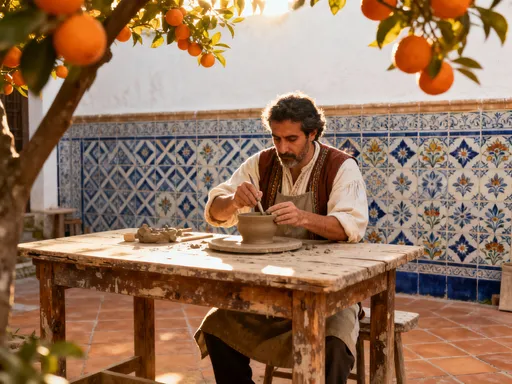
Milan’s reputation as a design capital is usually associated with fashion shows and luxury brands. But beyond the glossy runways lies a quieter, more enduring form of creativity—the craft lane movement. Scattered across the city, particularly in neighborhoods like Isola and Lambrate, are narrow lanes and hidden courtyards where artisans keep traditional skills alive. These are not souvenir shops, but working studios where ceramists shape clay by hand, leatherworkers stitch bags using century-old techniques, and glassblowers heat molten glass in small furnaces.
What makes these spaces special is their accessibility. Many studios open their doors to the public during weekends or by appointment, allowing visitors to watch the creative process up close. You can stand just feet away from a potter shaping a vase on a wheel, or observe a goldsmith engraving delicate patterns into a silver pendant. The atmosphere is intimate and unhurried. Artisans often welcome questions, explaining their materials, tools, and inspirations with quiet pride. Some even offer short workshops, where travelers can try their hand at basic techniques—rolling clay, stamping leather, or assembling a simple mosaic.
These craft lanes are more than tourist attractions—they are community hubs. Neighbors drop by to commission custom pieces, young designers come to apprentice, and local schools organize field trips. The studios often collaborate, hosting joint exhibitions or seasonal markets. In the fall, for example, the Isola Design Week extension features open studios, live demonstrations, and pop-up cafés, turning the entire neighborhood into a living design festival.
Supporting these artisans is also a form of sustainable tourism. Each piece is made to last, created with care and intention. Buying a hand-thrown bowl or a hand-stitched journal isn’t just a souvenir—it’s a connection to a person, a process, and a tradition. In a world of mass production, these spaces offer a counter-narrative: one of slowness, skill, and authenticity. For travelers, especially those who value meaningful experiences over material souvenirs, the craft lanes provide a deeply satisfying way to engage with Milan’s creative soul.
Why Themed Exploration Beats the Tourist Checklist
There is a growing body of evidence suggesting that the way we travel shapes not only our memories but our well-being. Studies in experiential psychology show that immersive, theme-based exploration leads to greater emotional engagement and longer-lasting satisfaction than checklist tourism. When travelers focus on a single theme—such as literature, green spaces, or craftsmanship—they develop a deeper understanding of a place, forming connections that go beyond surface-level observation.
In Milan, this difference is palpable. Standing in the Duomo’s shadow is impressive, but it’s also crowded, rushed, and often overwhelming. The experience is fleeting. In contrast, spending an hour in the Vintage Book Quarter, or walking the Urban Garden Circuit, allows for a more personal and reflective encounter. These experiences linger not just in photos, but in the senses—in the smell of old paper, the feel of handmade clay, the sound of water in a hidden courtyard.
Moreover, themed exploration encourages slower travel. It invites you to return to the same neighborhood at different times of day, to notice changes in light, sound, and activity. It fosters curiosity and reduces the pressure to “see everything.” Travelers who adopt this approach often report feeling more relaxed, more present, and more connected to the places they visit.
From a cultural perspective, it also supports local communities. While major landmarks are often managed by large institutions, hidden theme zones are sustained by small businesses, artists, and residents. By visiting these areas, travelers contribute directly to the local economy and help preserve unique aspects of urban life that might otherwise disappear. It’s a form of tourism that is not extractive, but reciprocal.
Final Thoughts: Carry the Mindset, Not Just the Memories
The beauty of Milan’s hidden corners is not just in their uniqueness, but in what they teach us about travel itself. They remind us that every city, no matter how familiar, holds undiscovered layers. The real journey is not about crossing borders, but about deepening perception. It’s about learning to see—not just with our eyes, but with our ears, our hands, and our hearts.
As you plan your next trip, wherever it may be, consider leaving room for the unexpected. Don’t just follow itineraries—follow curiosities. Look for patterns. Talk to locals. Walk without a destination. Let your travels be guided not by checklists, but by themes that resonate with you—whether it’s gardens, books, sound, or craft.
Because in the end, the most meaningful journeys are not measured in miles, but in moments of wonder. They are the quiet discoveries, the unplanned conversations, the places that make you pause and say, “I never knew this existed.” That’s the magic of travel—not in seeing the world, but in seeing it anew. And that’s a mindset worth carrying home.