Through the Lens of Java: Chasing Light in Yogyakarta’s Hidden Corners
Yogyakarta isn’t just a dot on Indonesia’s map—it’s a living canvas. As a photographer, I was unprepared for how the city’s soul would unfold through shadows on temple walls, colors in morning markets, and silhouettes against volcanic skies. This is more than sightseeing; it’s about capturing moments where culture and light collide. If your lens craves authenticity, Yogyakarta will steal your heart—one frame at a time.
The Photographic Pulse of Yogyakarta
Yogyakarta pulses with a rhythm that resonates deeply with those who seek to tell stories through images. More than a cultural capital, it is a city where tradition and creativity flow side by side like the Gadjah Wong River winding through its heart. Unlike Bali or Jakarta, where tourism often shapes the visual landscape, Yogyakarta remains grounded in its Javanese roots. The city does not perform for cameras—it simply lives, and that is precisely what makes it so compelling to photograph.
Every morning, as the call to prayer blends with the clatter of street vendors setting up their carts, the city awakens in layers. A woman folds banana leaves into parcels for traditional snacks. A young student in a batik uniform balances a stack of books on her bicycle. An elderly man sips jasmine tea beneath a banyan tree outside a neighborhood mosque. These are not staged scenes but fragments of daily life, rich with texture, emotion, and quiet dignity. For photographers, this means access to moments that feel genuine, unfiltered by commercial expectations.
The city’s artistic legacy runs deep. As the historical center of Javanese court culture, Yogyakarta has long nurtured music, dance, and visual arts. The Kraton, or royal palace, stands not only as a monument but as a living institution where gamelan rehearsals echo through courtyards and royal rituals unfold with ceremonial grace. These traditions are not relics—they are practiced, preserved, and passed down. Photographers who take time to understand this cultural continuity find that their images gain depth, context, and resonance.
What sets Yogyakarta apart is the ease with which one can move between grandeur and intimacy. One moment you’re standing before a 9th-century temple, the next you’re crouched in a narrow alley watching a craftsman carve wooden masks by hand. This contrast is not jarring—it is harmonious. The city invites you to slow down, to observe, and to wait for the right light, the right gesture, the right silence before pressing the shutter. In a world increasingly driven by speed and spectacle, Yogyakarta teaches the value of presence.
Prambanan Temple: Where Light Meets Legacy
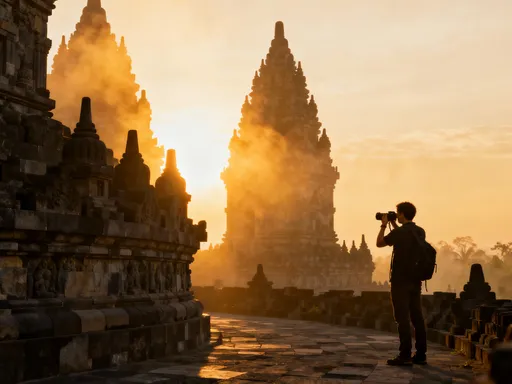
Rising from the flatlands east of Yogyakarta, Prambanan’s towering spires pierce the morning sky like fingers reaching toward the sun. As Indonesia’s largest Hindu temple complex, it stands as a testament to the island’s pluralistic history—a place where Sanskrit inscriptions coexist with Javanese craftsmanship. But beyond its historical significance, Prambanan offers photographers a masterclass in light, form, and timing.
The magic begins before dawn. Arriving by 5:30 a.m. ensures you beat the tour buses and enter the site in near-silence. The air is cool, the ground damp with dew, and the only sounds are distant roosters and the soft footsteps of early visitors. As the first light crests the horizon, it spills across the volcanic stone in waves of gold and amber. The central shrines—dedicated to Shiva, Vishnu, and Brahma—catch the glow first, their intricate reliefs emerging slowly from shadow like stories being whispered from the past.
This is the golden hour at its most dramatic. The low-angle sunlight accentuates the verticality of the temples, emphasizing their height and elegance. Shadows stretch long across the plazas, creating natural leading lines that guide the eye through the frame. Wide-angle lenses capture the full scale of the complex, while macro settings reveal the artistry in the carvings: celestial dancers frozen in motion, mythical beasts coiled in stone, and deities with serene expressions untouched by time.
But the human element adds another layer of meaning. As the sun climbs, local vendors arrive carrying offerings of flowers, rice, and incense. Many are women in traditional kebaya blouses, walking barefoot as a sign of reverence. These quiet acts of devotion are not performed for tourists—they are part of a living spiritual practice. Using a telephoto lens, photographers can capture these moments with respect, isolating gestures of prayer, the flicker of candlelight, or the fold of a sarong in the breeze. The key is patience: waiting for the right composition, the right expression, the right balance between subject and environment.
Later in the day, the light becomes harsher, but this too presents opportunities. The stark contrast between sun and shadow creates bold graphic compositions. Silhouettes against bright skies, patterns of light through stone lattices, and reflections in shallow pools all invite creative interpretation. Prambanan is not a place to rush through—it is a place to return to, again and again, under different skies, different moods, different light.
The Quiet Majesty of Ratu Boko Palace
Perched on a limestone ridge just north of Prambanan, Ratu Boko Palace offers a different kind of grandeur—one defined not by preservation but by poetic decay. Unlike the restored symmetry of Prambanan, Ratu Boko feels suspended between past and present, its broken walls and open courtyards framing views that stretch across the Yogyakarta plain to the distant silhouette of Mount Merapi.
The site is believed to have served as a royal retreat or spiritual sanctuary during the 8th century, though its exact purpose remains partly shrouded in legend. What is certain is that today, it offers some of the most atmospheric photography opportunities in Java. The ruins are spread across several terraces, connected by stone pathways and staircases. Gateways with ornate kala (demon) motifs stand sentinel, while meditation halls and bathing pools hint at rituals long past.
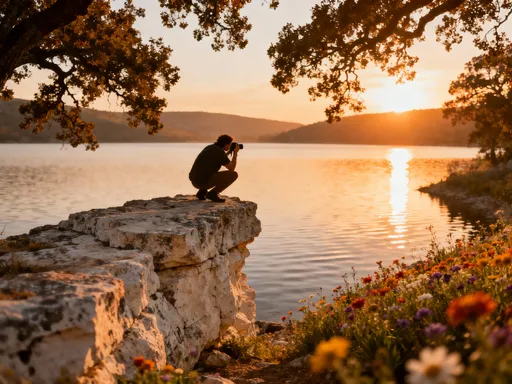
Golden hour here is nothing short of transcendent. As the sun dips below the horizon, the entire complex glows in warm hues—ochre, rust, and deep orange. The western-facing terraces become natural stages for silhouette photography. A lone figure standing at the edge of a crumbling wall, backlit by the fading sky, can become a powerful symbol of contemplation or connection to history. The lack of heavy restoration means textures are rich and varied: moss-covered stone, weathered carvings, and patches of wild grass growing through cracks.
Because Ratu Boko is less frequented than Prambanan, especially after sunset, photographers often enjoy extended solitude. This allows for careful composition, long exposures, and experimentation with depth of field. Tripods are permitted, and the open sky provides excellent conditions for twilight shots. The changing light moves quickly—within ten minutes, the warm glow can shift to cool blue, transforming the mood of the scene entirely. Those who stay past official closing time (with permission or during special evening events) are rewarded with near-total stillness, broken only by the occasional call of a night bird.
Local guides, often dressed in traditional Javanese attire, sometimes offer quiet narration of the site’s legends. One tells of Prince Boko and his giant servant, another of spiritual ascetics who once meditated here. While these stories may not be historically verifiable, they enrich the experience, adding a narrative layer to the images you capture. Understanding the myths allows you to photograph not just stone, but meaning.
Malioboro Street After Dark: A Symphony of Glow
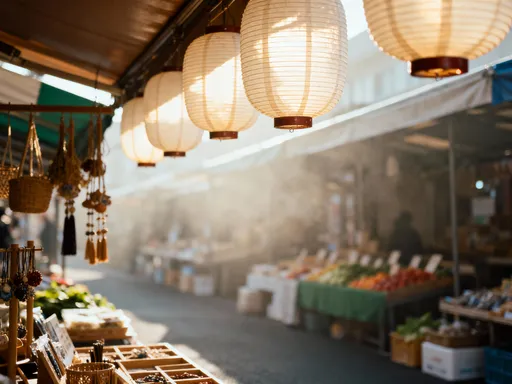
When daylight fades, Yogyakarta’s most famous thoroughfare undergoes a transformation. Malioboro Street, known by day for its batik shops and sidewalk vendors, becomes a vibrant tapestry of light and motion after dusk. Neon signs flicker to life, food stalls ignite with blue flames, and the air fills with the sizzle of satay, the laughter of families, and the hum of passing scooters.
For photographers, this is urban storytelling at its most dynamic. The challenge lies not in finding subjects—there are countless—but in distilling the chaos into coherent, emotive frames. The key is to look beyond the surface: not just the colorful umbrellas or the stacks of woven bags, but the faces behind them. A vendor’s hands, calloused from years of grilling chicken, turn skewers over glowing charcoal. A child peeks from beneath a batik sarong, eyes wide with curiosity. Two elderly women sit on a bench, sharing a plate of gudeg, their faces softened by the warm light of a nearby lantern.
Long exposures are essential here. Setting shutter speeds between 1/15 and 1 second captures the trails of scooter headlights and taillights, turning the street into a river of red and white streaks. Use a tripod or stabilize your camera against a railing to avoid blur. Meanwhile, wide apertures (f/1.8 to f/2.8) allow you to isolate subjects in low light, creating dreamy backgrounds of bokeh while keeping faces sharp and expressive.
The lighting is naturally dramatic—grills cast upward shadows, neon signs bathe skin in pink or blue, and candlelit tables create pockets of intimacy amidst the bustle. Resist the urge to over-edit. The soul of Malioboro is in its imperfection: the smudges on glass bottles, the frayed edges of awnings, the steam rising from a bowl of hot soup. These details tell the real story of a place that thrives on resilience, community, and warmth.
Photographing at night also requires sensitivity. Always ask before taking close portraits, especially of children or elders. A smile, a nod, or a simple gesture of respect goes further than a lens cap. Many vendors are happy to be photographed, particularly if you engage in conversation or purchase something. These small exchanges transform a snapshot into a shared moment—one that both you and your subject can remember.
Kotagede’s Silver Lane: Craft in Focus
Just a short drive south of the city center, Kotagede feels like a village preserved in time. Once the capital of the Islamic Mataram Sultanate in the 16th century, it is now best known for its centuries-old silversmithing tradition. Narrow streets lined with teakwood houses and jasmine gardens lead to hidden workshops where artisans hammer, file, and polish intricate jewelry by hand.
Walking through Kotagede is like stepping into a living museum of craftsmanship. In small, open-front studios, silversmiths work under natural light, their hands moving with practiced precision. Torches flicker as molten silver is poured into molds. Files scrape delicate patterns into metal. Finished pieces—filigree earrings, engraved rings, ceremonial buckles—are laid out on velvet trays like treasures from another era.
For photographers, this is a rare opportunity to document a full creative process, from raw material to finished art. The interplay of light and texture is extraordinary: sunlight filtering through wooden lattices creates dappled patterns on workbenches, while the reflective surface of polished silver adds a luminous quality to close-ups. Late morning, between 9 and 11 a.m., offers the best natural illumination—soft, directional, and warm.
Always seek permission before photographing artisans at work. Many appreciate the interest and may even pause to demonstrate a technique. Some workshops allow you to sit and observe for extended periods, offering tea and quiet conversation. These moments often yield the most authentic images—not posed, but caught in the flow of concentration and care.
The cultural significance of this craft cannot be overstated. Silverwork in Kotagede is not merely a trade; it is a heritage passed from generation to generation, often within families. Designs are inspired by Javanese mythology, Islamic geometry, and nature—lotus blossoms, dragons, and sacred trees. Photographing these details connects your images to a deeper narrative of identity, continuity, and pride.
Mount Merapi’s Foothills: Nature’s Raw Palette
Just north of Yogyakarta looms Mount Merapi, one of Indonesia’s most active volcanoes. Its presence is constant—visible from temple rooftops, felt in the mineral-rich soil, and remembered in the scars left by past eruptions. The foothills, particularly around the Balekambang and Kaliadem areas, offer photographers a landscape unlike any other: raw, elemental, and deeply moving.
Here, the earth has been reshaped by fire and force. Blackened fields stretch for kilometers, dotted with the skeletal remains of trees and the occasional concrete stump of a former home. Yet life is returning. Bright green shoots emerge from ash-covered soil. Birds nest in rocky crevices. Children play near warning signs, their laughter a quiet defiance of disaster.
This is not picturesque in the conventional sense. There are no postcard-perfect vistas, no manicured gardens. Instead, the beauty lies in resilience—in the slow, quiet reclamation of land by nature and community. For documentary and conceptual photographers, this terrain offers powerful metaphors: rebirth, endurance, the relationship between humans and nature.
Early morning is the best time to shoot. Fog often rolls in from the slopes, wrapping the landscape in soft, diffused light. It creates an ethereal mood, blurring the line between earth and sky. Ground-level shots emphasize contrast—tiny plants against vast fields of gray, a single umbrella in a farmer’s field, footprints in volcanic sand. Drones, where permitted and registered, provide a broader perspective, revealing the scale of the eruption’s impact and the patchwork of recovery efforts.
Guided jeep tours offer safe access to restricted zones. Drivers, often locals who lived through the eruptions, share personal stories—of evacuation, loss, and return. These narratives add emotional depth to your images. One man points to a crater where his house once stood. Another shows a photo of his family taken before the pyroclastic flow. Listening to these stories ensures your photography is not just observational, but respectful and informed.
Why Yogyakarta Belongs in Every Photographer’s Journey
Yogyakarta does not dazzle with spectacle. It does not demand attention with neon billboards or crowded landmarks. Instead, it reveals itself slowly, in quiet moments: a gamelan player tuning his instrument at dusk, a mother adjusting her child’s school bag beneath a streetlamp, smoke curling from a village kitchen into the evening air.
For photographers, this is a gift. In an age of instant content and algorithm-driven imagery, Yogyakarta reminds us that the most powerful photographs are born not from speed, but from stillness. They emerge from connection—with people, with place, with light. They are earned through patience, respect, and presence.
The city offers a rare combination: cultural richness, visual diversity, and human warmth. From the sacred silence of temple ruins to the electric pulse of night markets, from the precision of silversmiths to the raw power of volcanic landscapes, Yogyakarta spans a spectrum of stories waiting to be told. And unlike more polished destinations, it does not hide behind facades. What you see is what is real.
So pack your camera, your tripod, your widest lens and your most open heart. Come not to take, but to witness. Let the light guide you—through alleyways, across ruins, into workshops, along crater rims. Let the city teach you to see not just with your eyes, but with your spirit. Because in Yogyakarta, every photograph is more than an image. It is a memory, a moment, a quiet conversation between the world and the one who observes it.