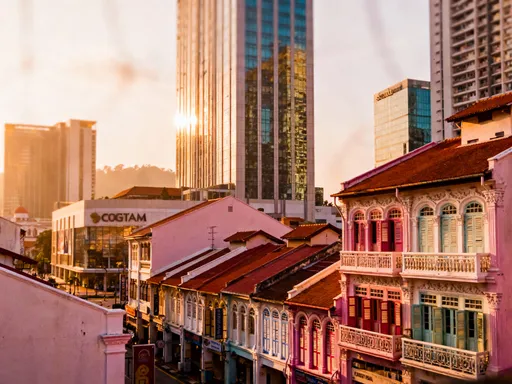
You Won’t Believe These Hidden Architectural Gems in Johor Bahru
Johor Bahru isn’t just a border town—it’s a visual feast of unexpected architecture. From colonial relics to futuristic malls, I was blown away by how much character this city packs into its skyline. If you're heading here and only crossing to Singapore, you're missing out. Let me show you the real Johor Bahru—where culture, history, and design collide in the most surprising ways. This is a city shaped by centuries of transition, where royal heritage meets tropical modernity, and where every building tells a story of identity, adaptation, and resilience. Beyond the queues at customs and the lure of tax-free shopping, Johor Bahru reveals itself through its streets, rooftops, and courtyards—a layered urban tapestry that rewards the curious traveler.
First Impressions: Stepping Into a City of Contrasts
Arriving in Johor Bahru from Singapore, whether via the Causeway or the Second Link, marks more than a geographical shift—it signals a transformation in atmosphere, rhythm, and visual language. The orderly quiet of Singapore gives way to a more vibrant, textured energy. Immediately, the cityscape presents a compelling mix: colonial-era facades stand shoulder to shoulder with glass-clad towers, while traditional shophouses buzz with street vendors and family-run businesses. The skyline, modest compared to its northern neighbor, carries a distinct personality—one shaped by layered histories and evolving ambitions.
What makes Johor Bahru’s architecture so compelling is how visibly it reflects the city’s journey. Once a royal seat of the Johor Sultanate, it evolved into a colonial administrative center and later a commercial gateway between Malaysia and Singapore. Each phase left its imprint on the built environment. The city does not erase its past; instead, it stacks it. A 19th-century palace sits near a hyper-modern shopping complex. Timber-framed Malay houses coexist with high-rise condominiums. This architectural layering is not chaotic—it is organic, telling a story of continuity and adaptation.
For the observant traveler, these contrasts are not just aesthetic—they are narrative. The shift from low-rise heritage buildings to soaring commercial towers mirrors Johor Bahru’s economic transformation. Yet, even as new developments rise, many older structures remain in active use, preserving a sense of place. Walking through the city center, one notices how pedestrians still navigate under the iconic five-foot ways of shophouses, seeking shade from the tropical sun—a design feature over a century old that remains perfectly functional today. This blend of old and new is not merely tolerated; it is lived.
The Royal Legacy: Istana Besar and Malay Architectural Elegance
At the heart of Johor Bahru’s historical identity stands the Istana Besar, the grand palace of the Sultan of Johor. Though the main palace complex is not open to the public, its presence is deeply felt. Located near the city center, the palace grounds are surrounded by lush gardens and guarded perimeters, offering glimpses of its regal architecture through ornate gates. Built in the late 19th century during the reign of Sultan Abu Bakar, the palace embodies traditional Malay architectural principles adapted for royal dignity and tropical comfort.
The design of Istana Besar reflects centuries-old Malay building wisdom. Elevated on timber stilts, the structure promotes airflow and protects against flooding—practical responses to the region’s climate. The sweeping roofs, often made of clay tiles or zinc, feature multi-tiered gables that extend far beyond the walls, providing shade and shelter from heavy rains. Intricate wood carvings adorn the eaves and panels, showcasing craftsmanship passed down through generations. These elements are not merely decorative; they express cultural values of harmony with nature, community, and spiritual reverence.
What sets Malay royal architecture apart is its integration with the environment and social life. The palace was designed not as an isolated fortress but as a center of governance and cultural life. Courtyards and open halls facilitated public audiences and ceremonies, reinforcing the Sultan’s role as both ruler and community leader. Even today, during royal events or religious festivals, the palace grounds come alive with tradition, connecting the past to the present in a living cultural continuum.
For visitors, respectful observation is key. While interior access is restricted, walking along Jalan Ibrahim offers views of the outer structures and perimeter walls. Nearby, informational panels and small exhibits at local cultural centers provide historical context. The experience is not about grand tours or photo opportunities—it’s about appreciating the quiet dignity of a building that symbolizes continuity in a rapidly changing city. Istana Besar stands not as a museum piece, but as a functioning symbol of Malay identity and royal heritage.
Colonial Echoes: British-Era Buildings That Still Stand Tall
Scattered throughout Johor Bahru’s urban fabric are enduring reminders of its colonial past—buildings constructed during British influence in the late 19th and early 20th centuries. Though Johor maintained its sovereignty under the Sultanate, British advisors played a role in administration, leading to the adoption of certain architectural styles. The old Johor Bahru City Council building, now repurposed for municipal functions, is a prime example. With its symmetrical façade, arched windows, and central clock tower, it echoes Victorian design principles, yet adapts them to the tropical climate.
One of the most striking features of these colonial buildings is their responsiveness to the environment. Deep verandas, known as “colonial verandahs,” wrap around structures, providing shade and encouraging airflow. High ceilings and large louvred windows facilitate natural ventilation, reducing reliance on mechanical cooling—a necessity in pre-air-conditioning times. Materials such as brick, plaster, and timber were chosen for durability and thermal performance. These design choices reflect a practical fusion of British architectural forms with local climatic needs.
The Johor Bahru Railway Station, another colonial-era landmark, continues to operate while retaining much of its original charm. Its long, low profile, pitched roof, and wide eaves give it a stately yet functional appearance. The station remains a vital transit hub, linking the city to other parts of Malaysia and serving thousands daily. Its preservation is a testament to the value placed on historical infrastructure, even as modern transportation systems expand around it.
Despite their historical significance, many of these buildings remain underappreciated by tourists and even locals. Unlike the grand colonial monuments of Kuala Lumpur or Penang, Johor Bahru’s colonial structures are often integrated into everyday urban life, making them easy to overlook. Yet, they represent a crucial chapter in the city’s development—bridging traditional Malay architecture with modern urban planning. Efforts to preserve and restore these buildings are ongoing, with some converted into cultural centers, offices, or heritage cafes, ensuring their continued relevance.
Chinese Shophouses: Where Heritage Meets Daily Life
No exploration of Johor Bahru’s architecture is complete without a walk through its historic shophouse districts, particularly along Jalan Trus and Jalan Tan Hiok Nee. These streets form the heart of the city’s heritage quarter, where rows of colorful, narrow-fronted buildings line the sidewalks, their facades adorned with intricate tiles, carved plaster, and vintage signage. Built primarily during the late 19th and early 20th centuries by Chinese merchants, these shophouses were designed as mixed-use spaces—commercial on the ground floor, residential above.
The most distinctive feature of these buildings is the “five-foot way”—a covered pedestrian walkway mandated by colonial regulations but rooted in practical tropical design. This shaded corridor protects pedestrians from sun and rain while fostering street-level activity. Today, these walkways are alive with small businesses: tailor shops, herbal medicine stores, family-run eateries, and artisanal cafes. The shophouses are not relics; they are working spaces that sustain local livelihoods and community interaction.
Aesthetic diversity defines the shophouse streetscape. Some buildings display Art Deco influences with geometric motifs and streamlined forms, while others feature ornate Baroque-style plasterwork or Peranakan-inspired ceramic tiles. Pastel pinks, greens, and yellows lend a soft vibrancy to the streets, creating a visual rhythm that invites slow exploration. Many of these buildings have been carefully restored, with owners balancing historical accuracy and modern functionality—replacing roofs and beams while preserving original windows, doors, and decorative elements.
Yet, challenges remain. Urban development pressures, rising property values, and the need for modern infrastructure sometimes threaten the integrity of these heritage zones. Some shophouses have been demolished or altered beyond recognition, erasing irreplaceable architectural details. Conservation efforts, led by local heritage groups and supported by municipal policies, aim to protect these buildings through incentives for restoration and stricter development guidelines. The goal is not to freeze the district in time, but to ensure that change happens thoughtfully, preserving the soul of the neighborhood while allowing it to evolve.
Religious Harmony in Design: Mosques, Temples, and Places of Peace
One of Johor Bahru’s most inspiring qualities is its architectural reflection of religious diversity and coexistence. Within a short walking distance, one can encounter a mosque, a Chinese temple, and a Hindu temple—each distinct in design, yet harmoniously integrated into the urban landscape. These sacred spaces are not hidden away; they are visible, active, and deeply woven into daily life, serving as both places of worship and cultural landmarks.
The Sultan Abu Bakar Mosque, often called the “Cathedral Mosque” for its striking Gothic-Victorian appearance, stands as a masterpiece of architectural fusion. Completed in 1892, it combines English Gothic elements—such as pointed arches, stained glass, and spires—with traditional Islamic features like domes, minarets, and intricate calligraphy. Built from grey stone and situated on a rise overlooking the Straits of Johor, the mosque commands attention without imposing. Its interior blends European craftsmanship with Malay artistry, featuring hand-painted ceilings and imported Italian marble. Worshippers and visitors alike are welcomed with a sense of serenity, enhanced by the gentle sound of the sea and the cool sea breeze.
Nearby, the Arulmigu Sri Rajakaliamman Glass Temple offers a different kind of awe. Entirely clad in colorful glass mosaics, the temple sparkles in the sunlight, its walls and ceilings shimmering with intricate Hindu iconography. Unlike traditional temples, this one uses modern materials to express ancient devotion, creating a space that feels both sacred and celebratory. Devotees light oil lamps, offer flowers, and chant prayers in an atmosphere of vibrant tranquility. The temple’s design reflects the adaptability of religious architecture—honoring tradition while embracing contemporary expression.
Just a few streets away, the Foo Hai Ch’an Buddhist Temple blends Chinese architectural forms with natural surroundings. Courtyards, lotus ponds, and tiered roofs create a meditative environment, while statues of Buddha and bodhisattvas inspire reverence. The temple also serves as a community center, hosting festivals, meditation sessions, and charity events. What unites these diverse religious buildings is their shared role as sanctuaries—not just for worship, but for connection, reflection, and peace. In a bustling city, they offer moments of stillness, reminding visitors that beauty and meaning can be found in quiet corners.
Modern Icons: Shopping Malls That Redefine City Space
If Johor Bahru’s heritage buildings speak to its past, its mega-malls represent its economic present and ambitions for the future. Places like Toppen, Paradigm Mall, and Mall of Medini are not just shopping centers—they are architectural statements, designed to attract cross-border visitors and redefine urban experience. These complexes feature soaring atriums, themed interiors, and climate-controlled environments that offer comfort and spectacle in equal measure.
Toppen, located in the heart of the city, stands out for its futuristic design and luxury branding. Its glass façade reflects the sky, while inside, wide corridors, high ceilings, and ambient lighting create a sense of openness and elegance. The mall integrates international brands with local retailers, catering to both Malaysian shoppers and Singaporeans seeking value. Its architecture is engineered to encourage exploration—wide escalators, open sightlines, and curated zones guide visitors through a seamless journey of consumption and leisure.
Paradigm Mall, one of the largest in southern Malaysia, emphasizes family-friendly design. Spacious walkways, dedicated children’s zones, and abundant seating make it accessible to all ages. Its interior features dynamic lighting and digital displays that shift with seasons and holidays, creating a constantly evolving atmosphere. The mall also includes a medical center, education hub, and transit links, reflecting a trend toward mixed-use urban complexes that serve multiple needs under one roof.
These malls are more than retail spaces—they are social hubs. They provide shelter from the heat, spaces for meetings, and venues for cultural events. For many, a visit to Johor Bahru is incomplete without a stop at one of these centers. From an architectural standpoint, they represent a new vernacular: one shaped by consumer behavior, environmental control, and global design trends. While critics may argue they lack local character, their role in the city’s economy and daily life is undeniable. They are, in many ways, the new public squares of Johor Bahru.
The Future in Concrete: Emerging Developments and Sustainable Design
Looking ahead, Johor Bahru’s architectural evolution continues at a rapid pace, particularly in the Iskandar Puteri and Medini districts. These planned urban zones are at the forefront of Malaysia’s vision for sustainable, smart-city development. Towering mixed-use complexes, eco-friendly residential towers, and integrated transport systems are reshaping the southern coastline, positioning the region as a key economic corridor.
New developments increasingly incorporate green building principles. Features such as solar panels, rainwater harvesting, energy-efficient glazing, and vertical landscaping are becoming standard in high-rise projects. Some buildings are designed to achieve Green Building Index (GBI) certification, reflecting a growing awareness of environmental responsibility. Pedestrian-friendly layouts, shaded walkways, and green corridors aim to reduce car dependency and enhance urban livability.
The Medini district, in particular, has attracted international investors and developers, resulting in a skyline that blends futuristic aesthetics with functional design. Buildings here often feature sleek, minimalist forms, reflective surfaces, and open public plazas. While some fear that rapid development may erode cultural identity, urban planners are increasingly emphasizing contextual design—ensuring that new structures respect local scale, climate, and heritage.
For travelers, these changes mean that Johor Bahru will continue to evolve in exciting ways. Over the next five to ten years, visitors can expect more walkable neighborhoods, smarter infrastructure, and a deeper integration of nature and design. The challenge will be balancing growth with preservation—ensuring that the city’s rich architectural layers are not buried beneath concrete and glass. The most successful developments will be those that honor the past while innovating for the future.
Conclusion: Why Johor Bahru’s Architecture Deserves Your Attention
Johor Bahru’s architecture is not merely a backdrop to travel—it is the story of the city itself. From the royal elegance of Istana Besar to the colonial grace of its administrative buildings, from the vibrant shophouse streets to the spiritual grandeur of its places of worship, and from the bustling malls to the rising towers of Iskandar Puteri, each structure contributes to a rich, evolving narrative. This is a city that does not hide its history; it displays it in brick, timber, stone, and glass.
For the thoughtful traveler, Johor Bahru offers more than shopping and convenience—it offers depth. By slowing down and looking closely, one discovers beauty in unexpected places: in the curve of a roof, the pattern of a mosaic, the shadow of a veranda. These details are not just decorative; they are testaments to generations of craftsmanship, cultural exchange, and human adaptation.
As Southeast Asia continues to grow and transform, cities like Johor Bahru remind us that progress does not have to mean erasure. Heritage and modernity can coexist. Tradition and innovation can inspire one another. The next time you cross the border, consider staying a little longer. Walk beyond the mall entrances. Look up, look around, and let the architecture guide you. Because in the walls, roofs, and streets of Johor Bahru, you’ll find not just a city, but a living museum of resilience, identity, and quiet beauty.