Santorini Without the Crowds: Hidden Viewpoints You Won’t Find on Instagram
Have you ever stood in line just to take a photo of a sunset others have already over-shared? I did—until I discovered Santorini’s quieter side. Beyond the postcard-perfect caldera edges lie real moments: untouched paths, local secrets, and views that feel like they’re meant just for you. This isn’t about skipping the classics—it’s about experiencing them differently. Santorini remains one of the most sought-after destinations in the Mediterranean, drawing over two million visitors annually. Yet with popularity comes congestion, particularly in Oia and Fira during peak season. The result? Sunset viewpoints packed shoulder to shoulder, long waits for photos, and an experience shaped more by algorithms than authenticity. But there is another way—one that honors both beauty and peace, wonder and stillness.
The Myth of the Perfect Sunset (And Why Everyone’s in the Same Photo)
The image is iconic: a whitewashed windmill silhouetted against a blazing orange sky, couples framed perfectly as the sun dips below the Aegean Sea. It’s the shot that dominates travel feeds, the moment millions chase each summer. But behind this visual perfection lies a growing challenge—overcrowding. At Oia’s famous castle ruins, the primary sunset vantage point, visitor density can reach up to 1.8 people per square meter during golden hour in July and August. That means standing packed among strangers, often arriving two hours early just to secure a sliver of view, all while navigating narrow cobblestone paths not designed for such volume.
This phenomenon is fueled by more than just natural beauty. Social media plays a central role in shaping expectations. Platforms like Instagram amplify certain viewpoints, turning them into must-see checklists. Travelers arrive with preloaded mental images, seeking to replicate what they’ve seen online rather than discover something new. The result is a feedback loop: more people visit the same spot, post the same photo, which in turn attracts even more visitors. The pursuit of the “perfect” shot often overshadows the actual experience of being present in a place of profound natural wonder.
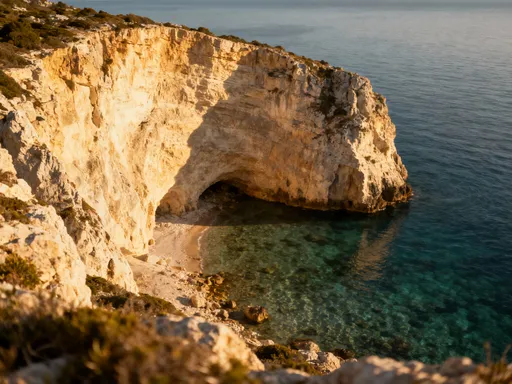
Yet Santorini’s magic doesn’t reside solely in one location or one moment of daylight. The island’s volcanic caldera stretches over 11 kilometers, offering countless angles, elevations, and atmospheres. Understanding this shifts the traveler’s mindset from chasing trends to seeking authenticity. Instead of asking, “Where should I take the best photo?” the better question becomes, “Where can I truly connect with this landscape?” That shift opens the door to alternatives—times, trails, and towns that deliver equal beauty without the bottleneck.
When to Go: Chasing Light, Not Likes
One of the simplest yet most effective strategies for avoiding crowds is adjusting timing. While sunsets dominate the cultural imagination, sunrises offer comparable brilliance with a fraction of the foot traffic. Between 5:30 and 6:30 a.m., the caldera glows in soft pastels—lavender, rose, and gold—painting the cliffs in a delicate light that changes by the minute. More importantly, you’ll likely have the view to yourself. Local photographers and hotel staff consistently report that sunrise hours are the most peaceful, with fewer than 10% of sunset-level visitors.
A well-planned itinerary can transform your experience. Begin your day with a pre-dawn walk from Fira to Imerovigli along the caldera path. By 6:00 a.m., you’ll reach one of the highest vantage points on the island, where the curvature of the earth seems visible against the horizon. After sunrise, return to town for a slow breakfast at a family-run café, then explore inland villages during midday when coastal hotspots are busiest. Late afternoon offers another window of opportunity—arrive at a lesser-known spot by 6:30 p.m. to catch the sun’s descent without the 8:00 p.m. rush.
Local insight enhances this strategy. Maria, who has managed a small guesthouse in Imerovigli for over 15 years, notes that “the real beauty of Santorini reveals itself when no one else is looking.” She recommends watching the light shift over the volcano around 4:00 p.m., when shadows stretch dramatically across the water. These moments aren’t viral—they’re personal. They don’t fill feeds, but they linger in memory. By prioritizing light over likes, travelers reclaim the essence of travel: presence, observation, and quiet awe.
Imerovigli: The Overlooked Gem Above the Caldera
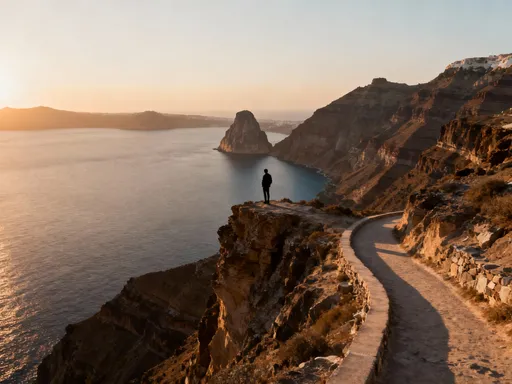
Nestled between Fira and Oia, Imerovigli often escapes the spotlight despite offering arguably the most breathtaking caldera views on the island. Perched at the highest point along the volcanic rim, it provides unobstructed panoramic vistas that stretch from the island of Thirassia in the west to the volcanic islets in the center of the caldera. Unlike Oia, where viewpoints are frequently crowded and access is limited to narrow alleys, Imerovigli’s elevated walkways and open terraces allow for spacious viewing, even during high season.
Foot traffic comparisons reveal a striking contrast. While Oia sees upwards of 15,000 daily visitors in peak months, Imerovigli averages fewer than 3,000. This difference is immediately noticeable—benches remain unoccupied, paths are uncrowded, and conversations flow naturally rather than being drowned out by tour groups. The village maintains a residential character, with local families, small chapels, and quiet gardens integrated into the landscape. It’s not built for mass tourism; it welcomes those who seek serenity alongside scenery.
The Skaros Rock trail begins here, but even before the hike, the village itself offers exceptional vantage points. The Path of the Donkeys, originally used by residents to transport goods from the old port, now serves as a scenic walking route lined with blooming bougainvillea and shaded alcoves. Along the way, small family-owned cafes like Remezzo and Andronis offer outdoor seating with uninterrupted caldera views—perfect for a mid-morning coffee or afternoon refreshment without the scramble for tables.
What sets Imerovigli apart is its balance of accessibility and tranquility. It’s reachable via public bus or a scenic 45-minute walk from Fira, yet it feels worlds apart in atmosphere. Travelers who choose this village often describe it as “Santorini as it once was”—a place where beauty isn’t performative, but lived. For families and older visitors seeking a more relaxed pace, it provides a comfortable base with fewer sensory demands and more opportunities for genuine connection with the island’s spirit.
Skaros Rock: A Short Hike with a Big Reward
At the heart of Imerovigli’s appeal is Skaros Rock, a dramatic volcanic formation jutting out from the caldera edge like a natural fortress. Once the site of a medieval fortress and a refuge during pirate raids, it now stands as a symbol of resilience and quiet grandeur. The hike to Skaros Rock takes approximately 20 to 25 minutes each way and descends about 280 stone steps before climbing back up to the promontory. While not technically difficult, the path is uneven in places, with loose gravel and exposed rock, making sturdy footwear essential.
What awaits at the top is worth the effort. From the flat summit, the view unfolds in all directions: the deep blue of the Aegean, the layered cliffs of the caldera, the distant shape of Thirassia, and the plume of steam rising from Nea Kameni. There are no railings, no crowds, no vendors—just raw nature and centuries of history. The absence of commercial development preserves the site’s authenticity, allowing visitors to experience the landscape as early inhabitants might have seen it.
Photography here feels organic rather than staged. Without the pressure to capture a specific pose or angle, travelers often find themselves simply observing—the way the wind moves across the water, how shadows shift with the sun, the sudden appearance of a seabird gliding along the cliff face. This is not a place for filters or edits; the colors are vivid enough on their own. Travelers are reminded that beauty doesn’t require perfection—it thrives in imperfection, in spontaneity, in stillness.
Safety considerations are important. The path is well-marked but not fully paved, and the descent can be slippery after rain. It’s advisable to hike during daylight hours and avoid the trail during strong winds. Families with young children should supervise closely, especially near the cliff edges. However, for those prepared, the experience is deeply rewarding—a rare combination of physical engagement and emotional resonance. Unlike the staged photo ops of central Oia, Skaros Rock offers a journey, not just a destination.
Fira’s Backstreets: Escaping the Postcard Path
Fira, the island’s bustling capital, is often dismissed as too touristy for peaceful viewing. Yet beyond the main promenade and crowded souvenir shops lies a network of quiet lanes and hidden courtyards that offer intimate caldera perspectives. By veering just 50 to 100 meters off the central path, travelers can find terraces with unobstructed views, often shared only with a local resident watering their plants or a cat basking in the sun.
One such spot is the small plaza near Agios Nikolaos Church, tucked behind the main shopping street. From this elevated corner, the caldera stretches out in full view, framed by traditional blue-domed architecture. Another lesser-known access point is the staircase leading down from the Orthodox Metropolitan Cathedral toward the old cable car station. Halfway down, a narrow balcony protrudes from the cliffside, offering a dramatic downward gaze into the abyss—a perspective rarely captured in travel guides.
These backstreet vantage points illustrate an important truth: serenity is often just a few turns away. While Fira’s main areas can feel overwhelming, especially during cruise ship arrivals, the village’s layout allows for easy escape. A leisurely stroll without a fixed destination often leads to unexpected discoveries—a quiet bench, a family-run bakery with outdoor seating, a chapel with open doors and flickering candles. These moments of unplanned beauty are what many travelers remember most, long after the photos fade from memory.
For those seeking comfort alongside exploration, several cafes in Fira’s side streets provide peaceful retreats. Selene, a respected restaurant known for its commitment to local ingredients, offers a terrace where guests can enjoy a late lunch with panoramic views and minimal noise. Similarly, the rooftop lounge at Santo Winery, while known to some, remains under-visited compared to Oia’s bars, making it an ideal spot for an early evening drink as the light begins to soften.
Off-the-Beaten-Path Lookouts: From Pyrgos to Megalochori
To fully appreciate Santorini’s diversity, one must look beyond the caldera edge. Inland villages like Pyrgos, Megalochori, and Emporio offer elevated viewpoints with fewer tourists and a deeper connection to the island’s cultural roots. Perched on a hilltop, Pyrgos was once a defensive stronghold and now serves as one of the island’s best-kept secrets. Its labyrinthine streets climb toward a Venetian castle at the summit, where 360-degree views encompass vineyards, distant coastlines, and the entire arc of the caldera.
Unlike coastal towns shaped by tourism, Pyrgos moves at a gentler pace. Local life unfolds naturally—children play in the central square, elders gather for coffee, and cats weave between flower-filled courtyards. The village hosts no large hotels or cruise shuttles, preserving its authenticity. From the castle walls, the view at midday is striking: sunlight reflects off white buildings like scattered pearls, while the shadow of the volcano stretches across the sea. It’s a perspective that captures Santorini not as a postcard, but as a living, breathing community.
Megalochori, another inland gem, offers quiet charm and architectural beauty. Though smaller, it features restored mansions, shaded squares, and a network of arched passageways that create a sense of discovery with every turn. From the bell tower of Agia Eirini Church, visitors can climb a short staircase for an elevated view over red-tiled roofs and vineyard rows. These vantage points are rarely marked on tourist maps, yet they deliver profound visual rewards.
Reaching these villages is easiest by rental car or ATV, both widely available and practical for independent travel. This mode of transport not only grants access to hidden lookouts but also supports a more sustainable approach—reducing congestion in central areas while spreading economic benefits to lesser-visited communities. Travelers are encouraged to respect local customs: park considerately, keep noise levels low, and support family-run tavernas. In doing so, they become guests rather than spectators, participants rather than passersby.
How to Experience Santorini Like a Local—Not a Checklist Tourist
The most transformative travel experiences arise not from ticking boxes, but from slowing down. Locals on Santorini often speak of “philoxenia”—the ancient Greek concept of hospitality and deep welcome. To experience the island authentically is to embrace this spirit, not just as recipients, but as practitioners. It means greeting shopkeepers by name, asking for recommendations instead of consulting a guidebook, and allowing space for unplanned moments.
One traveler recalls sitting on a bench in Pyrgos when an elderly woman invited her to share a slice of watermelon from her garden. They sat in comfortable silence, watching the light change over the hills. Another describes taking a wrong turn in Megalochori and stumbling upon a small family bakery where the owner offered a taste of freshly made fava. These interactions don’t fit neatly into itineraries, yet they define the journey.
Mindful travel also extends to photography. Rather than framing every moment for social media, consider putting the phone away and simply absorbing the view. When you do take photos, do so respectfully—avoid blocking pathways, be patient, and remember that other travelers are seeking peace too. A genuine photograph, taken with intention, carries more weight than a dozen staged ones.
In the end, the most unforgettable views are not those with the most likes, but those that stir something within. They are the sunrise seen in silence, the conversation shared over coffee, the path discovered by accident. Santorini’s true beauty lies not in its perfection, but in its ability to remind us of our own presence. By stepping off the beaten path—literally and figuratively—we don’t just see the island differently. We see ourselves more clearly. And that is a journey worth taking.